Seeing Through the Earth: The Revolution of Complex Geological Modeling in the Grid World
2026-01-13Traditional geological modeling relies on two-dimensional drawings and sparse data, akin to diagnosing a critical condition with a blurry X-ray—information is fragmented, details are missing, and it struggles to meet the high-precision demands of fields like energy exploration and engineering safety. Today, this predicament is being shattered by complex geological modeling technology centered on the "Grid World": it subdivides subsurface space into millions of grid cells, assigning precise geological attributes to each "cell," constructing high-resolution three-dimensional digital strata, and enabling immersive insight and quantitative analysis of subsurface structures.
Conquering Three Major Technical Challenges
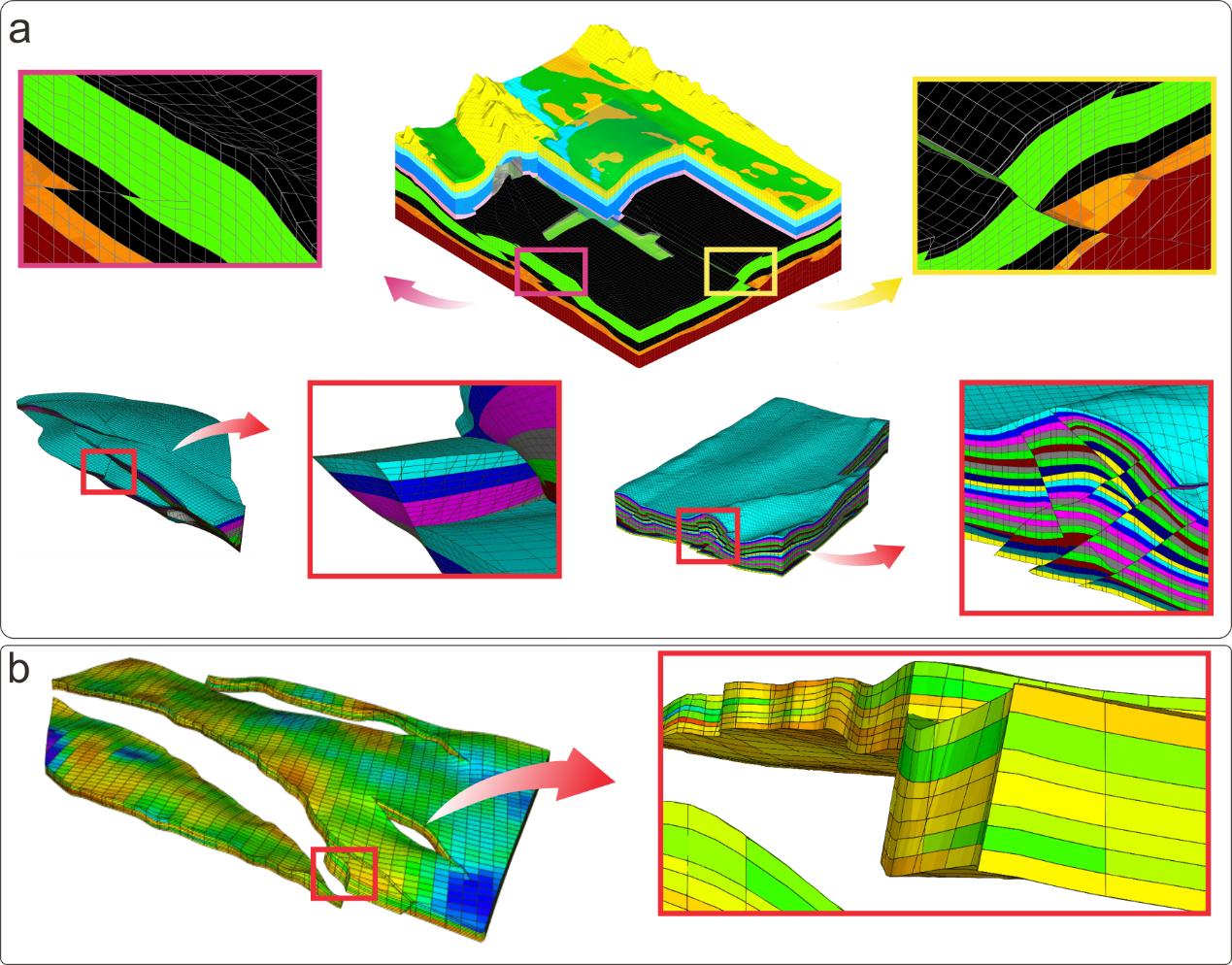
Accurate Restoration of Complex Structures:Faced with complex geological phenomena such as thrust faults, nappe structures, and sub-salt structures, Grid World employs adaptive grid subdivision technology, automatically refining grids in areas with intense structural changes while appropriately coarsening them in gentle regions. This ensures both accuracy and computational efficiency.
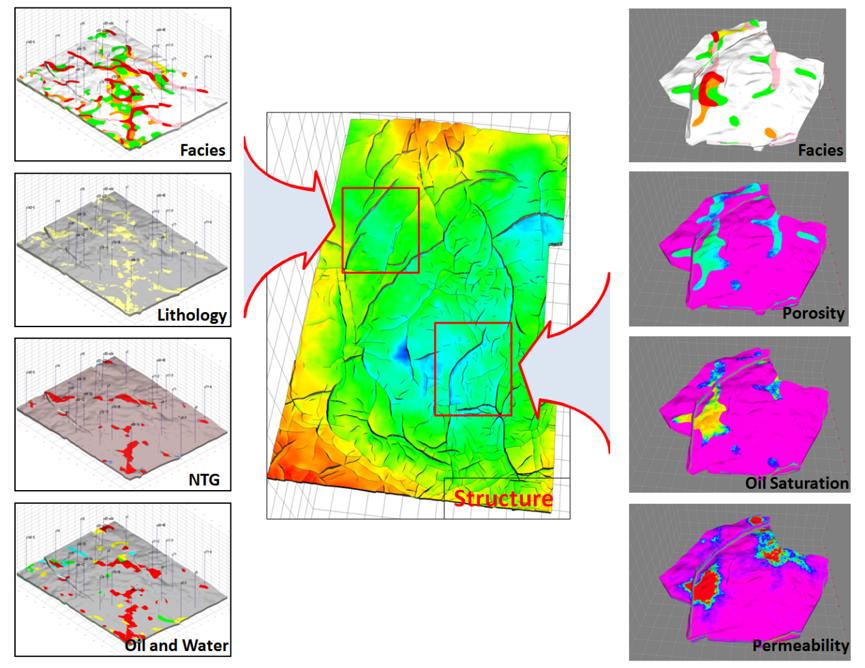
Seamless Integration of Multi-Scale Data:From regional-scale seismic data to well-point-scale logging data, the span reaches six orders of magnitude. Grid World innovatively proposes a multi-scale fusion modeling method, allowing data from different sources and scales to coexist harmoniously within a single model.
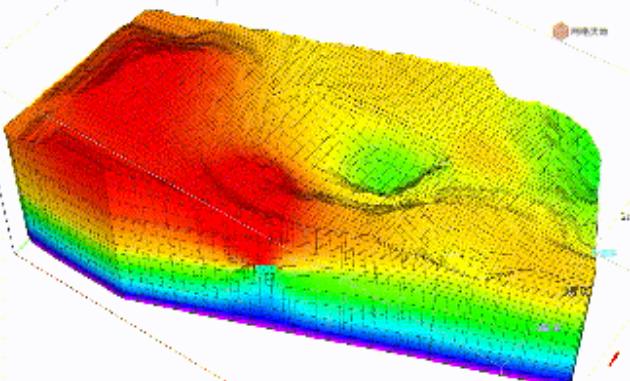
Dynamic Simulation of Geological Processes:Static models are just the beginning. Grid World goes further by enabling the dynamic simulation of geological processes. By algorithmically representing processes such as sedimentation and tectonic evolution, their models can "replay" geological history and predict geological changes.
How Technology Is Transforming Industries
In oil and gas exploration, complex geological modeling technology has significantly reduced drilling failure rates. By simulating the flow paths of oil and gas underground, engineers can optimize extraction plans and improve recovery rates.
In mineral development, detailed geological models help mining companies accurately define ore boundaries, assess resource reserves, plan extraction sequences, and reduce resource waste.
For geological disaster prevention, scientists can simulate fault activity, groundwater flow, and rock stress changes, providing scientific bases for urban planning, dam construction, and tunnel engineering.
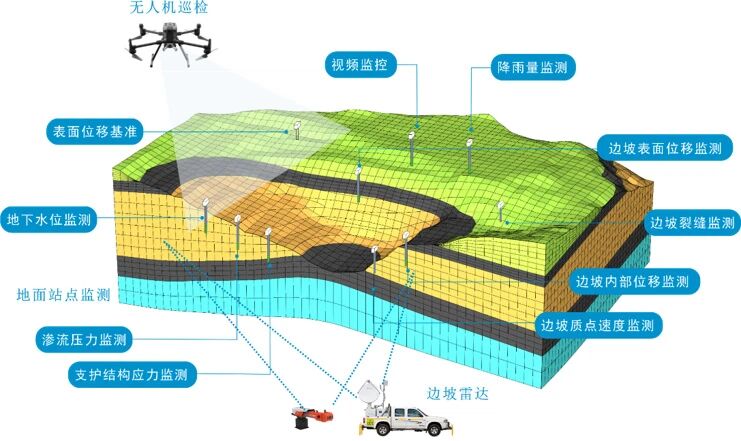
Challenges and the Future
Of course, building these detailed models is no easy task. Challenges such as insufficient data, immense computational resource requirements, and difficulties in multi-disciplinary collaboration still persist. However, with advancements in artificial intelligence algorithms, high-performance computing, and cloud platform technologies, geological modeling is becoming more intelligent and efficient. In the future, with the integration of IoT sensors and real-time monitoring data, geological models will evolve from "static snapshots" into "dynamic films," enabling real-time simulation and prediction of subsurface processes.
From hand-drawn geological maps to the digital Grid World, the progress in geological modeling technology has not only changed how we understand the Earth but also created immense value in fields such as energy security, resource development, and disaster prevention and control. In this "Grid World" composed of data and algorithms, humanity is seeing through the secrets of the Earth with unprecedented clarity.