From Mineral Exploration to Computational Mining: How Smart, Transparent Geology Supports Efficient Coal Development
2026-11-04Foreword
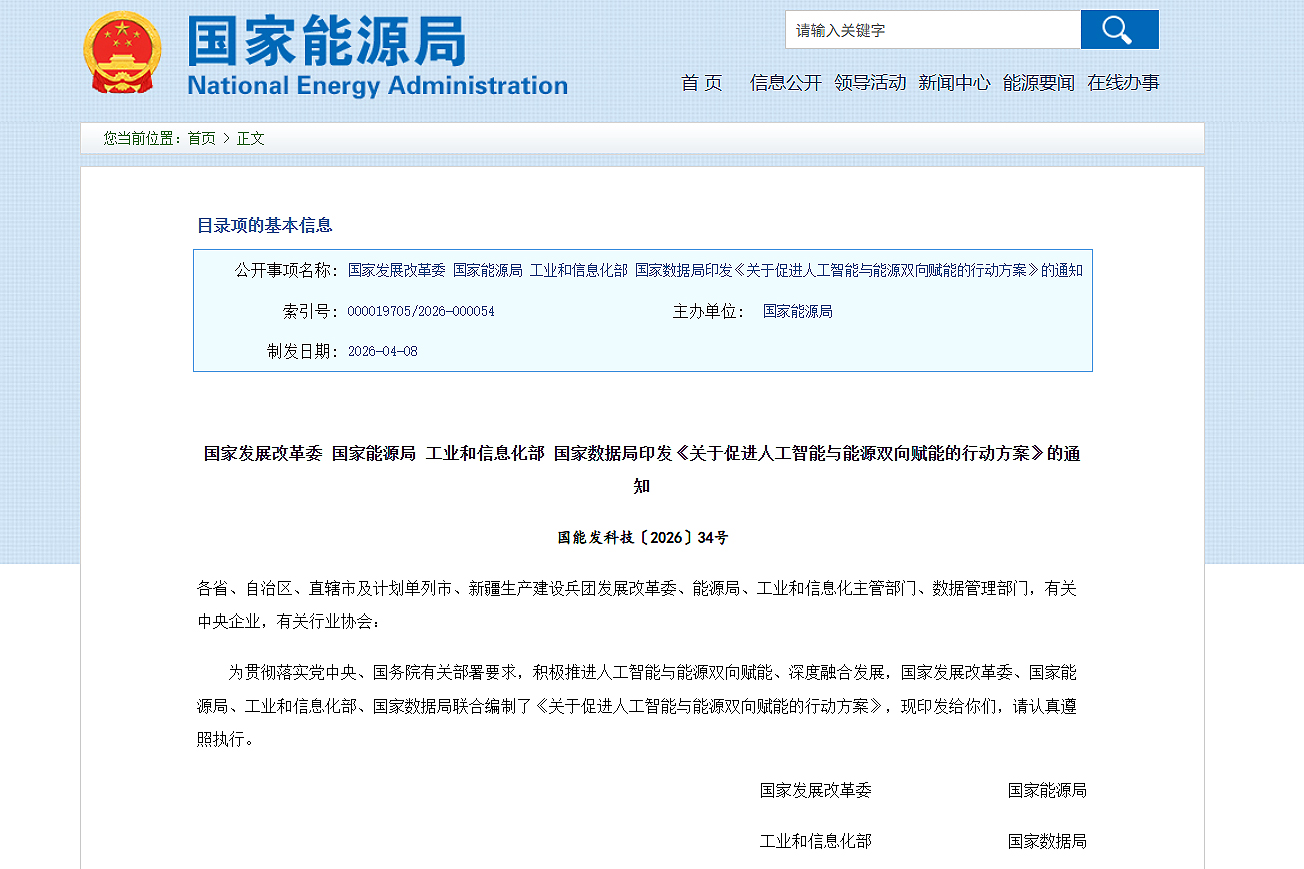
On May 8 this year, the National Development and Reform Commission (NDRC), the National Energy Administration (NEA), the Ministry of Industry and Information Technology (MIIT), and the National Data Administration (NDA) jointly issued the Action Plan for Promoting Two-Way Empowerment of Artificial Intelligence and Energy (Document No. 34 [2026] of the NEA Science and Technology Department). The plan coordinates the deployment of 10 strategic directions and 29 key tasks. It places special emphasis on scenarios for the smart and efficient development of coal, covering precise detection and transparent modeling of coal geological structures, unmanned operations at mining and excavation faces, intelligent decision-making for open-pit mines, early warning systems for coal mine safety, and intelligent regulation of mining area ecosystems. The efficient exploration and development of oil and gas have also been integrated into the broader AI application layout for the energy sector.
The national priority on advancing geological modeling follows a clear logic: no matter how powerful AI becomes, it cannot function without an accurate, real-world underground map as its foundation. Acquiring subsurface geological data is highly costly; seismic acquisition requires massive investment, and borehole layouts are inherently sparse, making geological interpretation naturally prone to multi-solution ambiguities. Traditional modeling relies on manual fault identification and horizon tracking, which often takes months when dealing with complex geological structures, and the resulting models are easily skewed by missing data. For both underground and open-pit mines, a precise and reliable transparent geological model serves as an indispensable prerequisite for intelligent coal mining, unmanned excavation, risk early warning, and collaborative decision-making in mining, transportation, and dumping operations.
The key to breaking through current bottlenecks lies in three main directions:
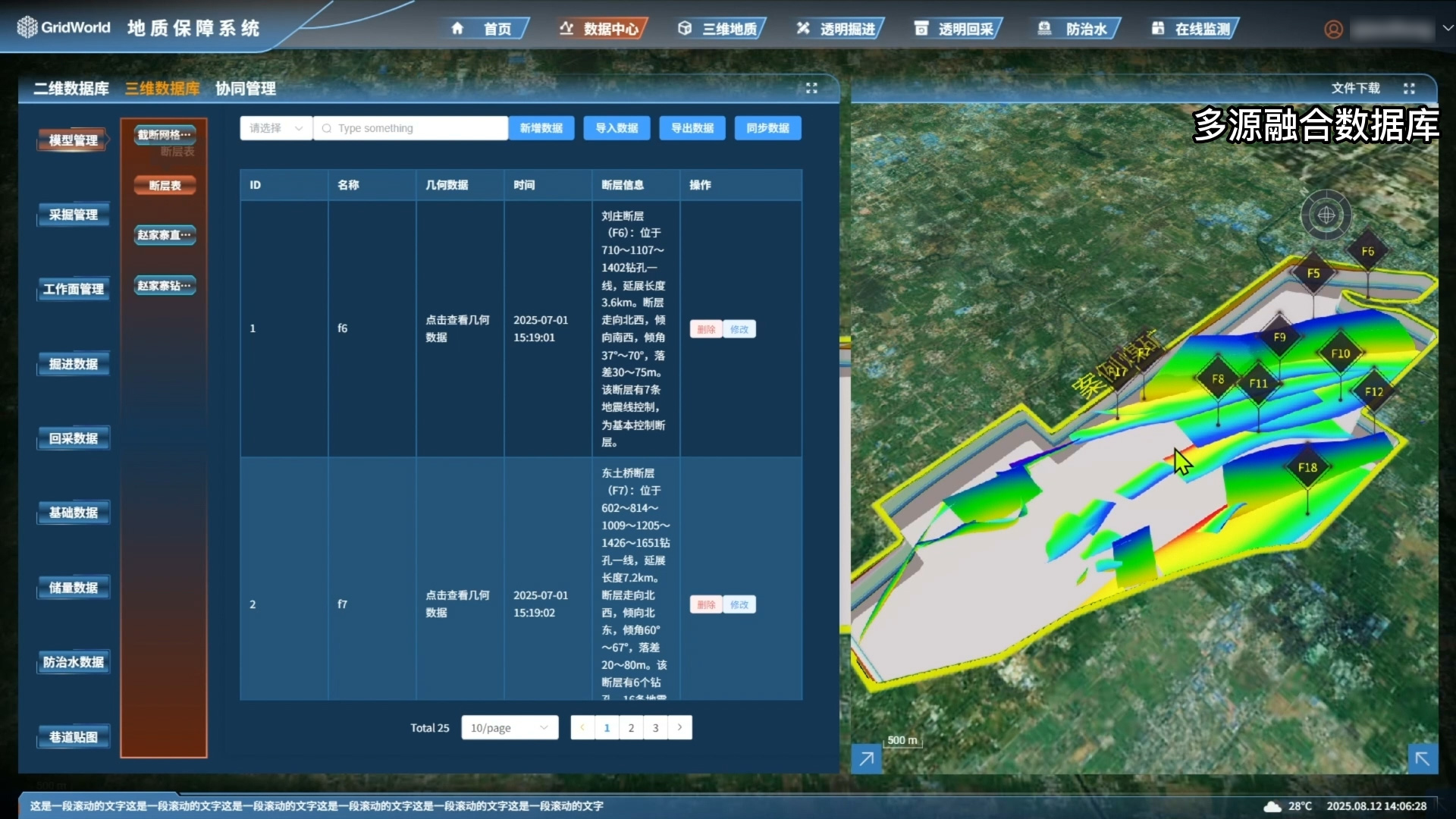
First, automatically fusing multi-source heterogeneous data to generate topologically compliant 3D models. Seismic, borehole, outcrop, and well-logging data come in varying standards, making manual integration inefficient and error-prone. Compressing the modeling cycle from months to days is merely the surface benefit; the core value lies in ensuring topological compliance so the models can be directly fed into simulation calculations, rather than serving as mere visualizations. This enables practical engineering tasks such as excavation design, mine pressure analysis, and slope stability evaluation.
Second, activating static models to conduct dynamic simulation analysis. Modeling is just the starting point; the true value is realized in multi-physics coupled simulations of stress and seepage. This allows for the early prediction of hazards such as surrounding rock deformation, slope sliding, and water inrush, shifting traditional post-incident reviews to proactive risk forecasting. This provides a solid basis for safety management in coal mines and extraction planning in open-pit mines.

Third, leveraging generative AI to bridge data gaps. Given that subsurface data is scarce and expensive, the data synthesis capabilities of generative AI offer a new paradigm. The approach is shifting from "building models based on available data" to "modeling and supplementing data on demand," which is also a key breakthrough area for energy AI.

The Action Plan sets clear development milestones: by 2027, high-value scenarios in the energy sector will be progressively implemented, and a preliminary mechanism for co-building and sharing high-quality datasets will be established; by 2030, the R&D and application of specialized AI technologies in the energy sector will reach world-leading levels.
Following these three technical pathways, GridWorld has been deeply engaged in this field for over two decades. Relying on its proprietary DeepProbe geoscience modeling software, CAE intelligent application components, and Transparent Earth Engine, combined with the tEgg generative pre-trained geological foundation model, GridWorld has achieved multi-version, full-lifecycle dynamic modeling. The company has built a complete technical chain encompassing "modeling - simulation - data aggregation - intelligent generation." Its primary focus is serving transparent geological construction, engineering simulation, and intelligent decision-making for underground coal mines and open-pit mines, while also accommodating digital twin needs for oil and gas exploration.

Coal development is undergoing a transformation from "drilling to explore coal" to "computing to mine coal." The core of this shift is building an underground digital twin that is computable, iterable, and predictive. The policy window has arrived, and the true value of geological models will ultimately be tested on the frontlines of mining and excavation.